.jpg)
Safety doesn’t happen by accident. Neither do injuries. On any active job site, the difference between a near-miss and a catastrophe often comes down to awareness—moment-to-moment attention, consistent communication, and the shared responsibility of every team member. That’s where OSHA toolbox talks come in. These short, targeted safety discussions aren’t just compliance checkboxes. When done right, they’re frontline defenses against complacency, miscommunication, and preventable harm.
Despite their importance, many companies treat toolbox talks as routine time-fillers—rushed, scripted, and disconnected from real crew concerns. The result? Low engagement, repeated incidents, and a false sense of compliance. The real power of a toolbox talk lies not in reading from a template, but in creating a culture where safety is spoken, questioned, and reinforced daily.
This guide breaks down what OSHA toolbox talks really are, how to run them effectively, and how to turn them into tools that protect people—not just satisfy auditors.
What Are OSHA Toolbox Talks?
OSHA toolbox talks are informal, short-duration safety meetings held at the job site, typically before work begins. They focus on a single safety topic relevant to the day’s tasks, environment, or recent incidents. While OSHA doesn’t mandate specific formats, it strongly recommends these discussions as part of an effective safety and health program.
These talks usually last 10 to 15 minutes and involve a supervisor or safety officer leading a conversation with workers. The emphasis is on interaction, not lecture. The goal is awareness, understanding, and immediate application.
Common topics include: - Fall protection - Hazard communication - PPE use - Electrical safety - Equipment operation - Heat stress - Ladder safety - Confined space entry
Unlike formal OSHA training (such as 10-hour or 30-hour courses), toolbox talks are situational. They meet crews where they are—on the ground, in the moment. That immediacy is their strength.
Why Toolbox Talks Matter Beyond Compliance
Yes, conducting these talks supports OSHA compliance, but their real value is cultural. Repeated, meaningful safety conversations reshape behavior. They turn abstract rules into lived practices.
Consider this: A crew installs roof trusses daily. One morning, the foreman notices a few workers skipping harness use on a low-slope roof “because it’s only 12 feet.” That’s the perfect moment for a toolbox talk—not about “fall protection policies,” but about real consequences: a co-worker’s past fall, the physics of a 12-foot drop, or how harnesses save lives even on “easy” jobs.
When talks are relevant and conversational, workers are more likely to: - Speak up about hazards - Correct peers respectfully - Internalize risks - Retain safety knowledge
A well-run toolbox talk builds psychological safety—workers feel it’s okay to ask questions or point out risks without fear of ridicule. That shift doesn’t happen overnight, but it starts with consistent, authentic dialogue.
How to Conduct an Effective Toolbox Talk
The best toolbox talks follow a simple but deliberate structure. Here’s a proven workflow:

#### 1. Choose a Relevant Topic Pick a subject tied to current work. If crews are trenching, talk about cave-in risks. If it’s the first hot week of summer, focus on heat illness. Relevance drives attention.
#### 2. Prepare Briefly, Speak Naturally Use a template as a guide, not a script. Know key points: hazard, risk, control, action. But speak like a human—not a compliance bot.
#### 3. Engage the Team Ask open-ended questions: - “Has anyone seen this hazard before?” - “What would you do if you saw a damaged extension cord?” - “Who’s trained on this lift plan?”
Let workers share experiences. That peer input often resonates more than top-down instruction.
#### 4. Demonstrate When Possible If discussing PPE, have workers show their gloves, goggles, or respirators. If the topic is ladder safety, walk over and inspect one on-site. Visual reinforcement sticks.
#### 5. Document Thoughtfully Sign-in sheets matter for records, but don’t reduce the talk to a paperwork exercise. Capture: - Date and time - Topic and location - Attendees - Key points discussed - Any action items
Keep it simple. The goal is accountability, not bureaucracy.
Common Mistakes That Undermine Toolbox Talks
Even companies that run talks weekly can fall into traps that drain their impact. Avoid these common pitfalls:
#### Mistake 1: Repeating the Same Topics with No Variation Covering “PPE” every Monday with the same script breeds disengagement. Rotate sub-topics: hand protection one week, eye safety the next. Tie it to tasks.
#### Mistake 2: One-Person Monologue If only the supervisor talks, it’s not a talk—it’s a memo. Silence from workers should prompt reflection, not relief.
#### Mistake 3: Ignoring Near-Misses or Incidents Failing to discuss a recent slip, a faulty tool, or a close call signals that safety isn’t a priority. Use these moments to drive home lessons.
#### Mistake 4: Poor Timing Holding a talk after work starts—especially when crews are rushed—sends the message that safety is secondary. Schedule it before tools are picked up.
#### Mistake 5: No Follow-Through If workers raise concerns but nothing changes, future talks lose credibility. Track action items: “We’ll replace those damaged gloves by Thursday.”
Real-World Toolbox Talk Examples
Theory only goes so far. Here are practical examples of how effective talks play out:
Example 1: Working Around Forklifts - Hazard: Pedestrian-vehicle collisions in warehouse zones - Talk Flow: “Last week, Maria had to jump back when a forklift turned blind. Let’s talk about how that happens. What’s the minimum clearance we should keep?” Guide discussion: eye contact, horn use, designated walkways. Action: Mark pedestrian paths with floor tape by end of day.
Example 2: Changing Grinding Discs - Hazard: Flying debris or disc shattering - Talk Flow: “I saw someone changing a disc without a face shield. Let’s walk through the safe steps.” Demonstrate lockout, using the wrench, inspecting the disc. Ask: “What could go wrong if we skip one step?”
Example 3: Working in Confined Spaces - Hazard: Oxygen deficiency, entrapment - Talk Flow: “This tank entry is scheduled for tomorrow. Who’s on the entry team? Is rescue equipment staged? Let’s review the permit together.” Check gas monitor calibration, communication method, standby person.
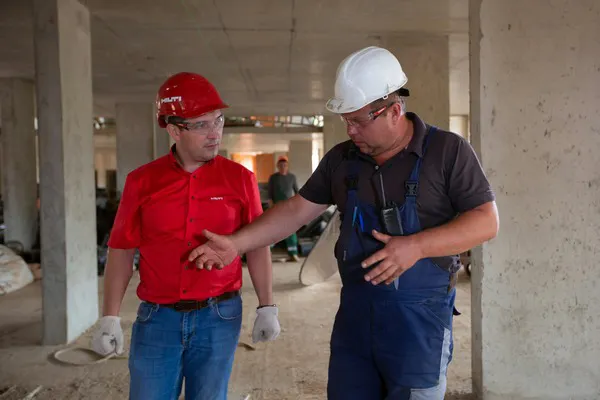
These aren’t hypotheticals. They’re snapshots of safety leadership in action—proactive, specific, and participatory.
Tools and Templates to Support OSHA Toolbox Talks
While no app replaces face-to-face dialogue, digital tools can streamline planning, tracking, and consistency. Here are five reliable options used by safety managers:
| Tool | Best For | Key Features | Limitations |
|---|---|---|---|
| SafetyCulture (iAuditor) | Mobile teams, real-time reporting | Pre-built templates, photo capture, PDF reports | Subscription cost scales with users |
| EZOfficeInventory | Small to mid-sized crews | Free toolbox talk templates, sign-in sheets | Limited interactivity |
| Fleetio Fleet Maintenance | Equipment-heavy sites | Integrates maintenance logs with safety checks | Narrow focus on vehicles/machinery |
| SmartSafe | Construction & manufacturing | AI-powered risk suggestions, multilingual support | Requires training to use fully |
| SiteDocs | Industrial environments | Offline access, compliance tracking, audit trails | Steeper learning curve |
Use these as force multipliers—not replacements. A downloaded template is only as good as the conversation it inspires.
Making Toolbox Talks Part of Your Safety Culture
Sustainability is the end goal. To move beyond sporadic compliance, integrate toolbox talks into your operational rhythm:
- Schedule them consistently – Daily or weekly, depending on risk level.
- Rotate facilitators – Let lead workers run talks. It builds ownership.
- Link them to JSA/JHA updates – Align talks with job safety analyses.
- Review records monthly – Look for gaps, repetition, or missing high-risk topics.
- Invite worker feedback – Ask crews: “What safety topic should we cover next?”
The best programs don’t just document talks—they improve them over time.
Final Thoughts: Safety Is a Conversation, Not a Lecture
OSHA toolbox talks work when they feel necessary, not obligatory. They succeed when workers walk away not just informed, but involved.
Forget perfection. Start with presence. Show up, focus on real risks, and listen as much as you speak. A 10-minute talk that sparks one person to double-check a harness or report a frayed cable—that’s success.
Build the habit. Refine the process. Make safety something people do, not something they’re told to do.
Run your next toolbox talk like it matters—because it does.
Frequently Asked Questions
What is the purpose of an OSHA toolbox talk? The purpose is to raise awareness of job-specific hazards, reinforce safe practices, and encourage open communication about safety on a regular basis.
Do OSHA toolbox talks need to be documented? Yes. While OSHA doesn’t require a specific format, documentation (attendees, topic, date) proves due diligence and supports compliance during inspections.
How long should a toolbox talk last? Typically 10 to 15 minutes. The goal is brevity and focus, ensuring workers remain engaged without disrupting workflow.
Who should lead a toolbox talk? A supervisor, foreman, or designated safety officer—someone familiar with the work and able to facilitate discussion.
Can toolbox talks be conducted virtually? Only if crews aren’t on-site. For active job sites, in-person talks are more effective due to immediate context and hands-on demonstration.
How often should toolbox talks be held? At a minimum, weekly. High-risk environments may require daily talks, especially when new hazards are introduced.
Are toolbox talks the same as safety training? No. Toolbox talks are short, situational discussions. Formal safety training is longer, structured, and often required for OSHA certification.
FAQ
What should you look for in OSHA Toolbox Talks: Your Guide to Safer Work Sites? Focus on relevance, practical value, and how well the solution matches real user intent.
Is OSHA Toolbox Talks: Your Guide to Safer Work Sites suitable for beginners? That depends on the workflow, but a clear step-by-step approach usually makes it easier to start.
How do you compare options around OSHA Toolbox Talks: Your Guide to Safer Work Sites? Compare features, trust signals, limitations, pricing, and ease of implementation.
What mistakes should you avoid? Avoid generic choices, weak validation, and decisions based only on marketing claims.
What is the next best step? Shortlist the most relevant options, validate them quickly, and refine from real-world results.