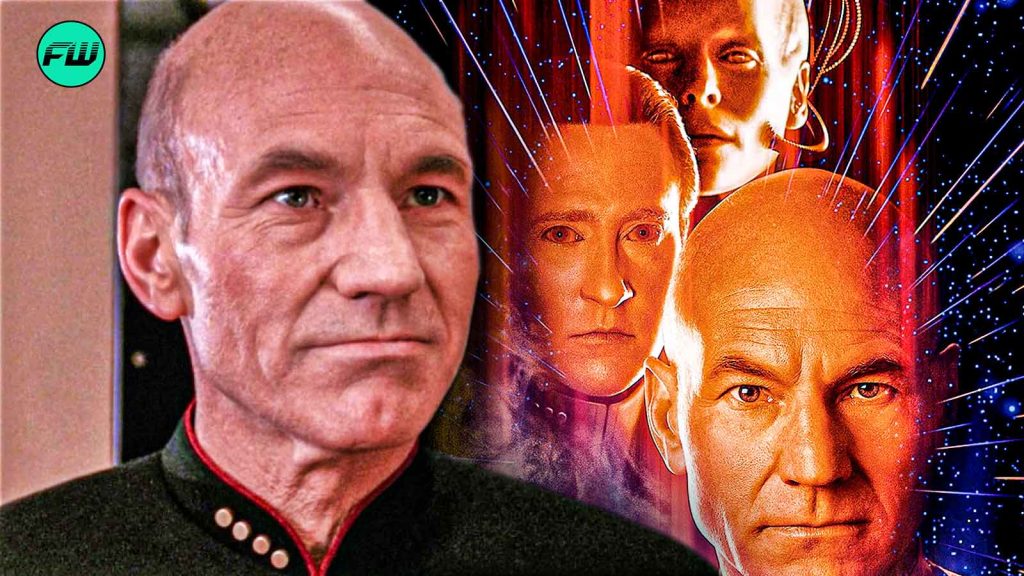
In 1996, Star Trek: First Contact brought the Borg to the big screen in a high-stakes battle for Earth’s future. Among the cast was an unexpected face—not a trained actor, but a scientist deeply immersed in the search for intelligent life beyond Earth. His presence wasn’t a gimmick. It was a statement: science and storytelling could coexist, and real-world explorers of the cosmos belonged in the narratives we create about it.
That scientist was Dr. Seth Shostak, senior astronomer at the SETI Institute—and the real-life extraterrestrial researcher who stepped onto the Enterprise-E bridge not as a consultant, but as a background performer with a mic and a line.
Why a Scientist Ended Up on the Big Screen
Hollywood often draws from scientific advisors to ensure accuracy in dialogue, ship design, or space physics. But casting a working SETI researcher in a speaking role? That’s rare. Yet First Contact director Jonathan Frakes made a deliberate choice: include people who spend their lives scanning the stars in the very scenes depicting humanity’s first official contact.
Shostak wasn’t plucked from obscurity. He had been a vocal, media-savvy advocate for SETI, appearing on documentaries, radio shows, and news segments discussing the plausibility of alien life. When the production team sought authenticity for the “first contact” sequence—where scientists in Mission Control react to the warp flight of Zefram Cochrane—they didn’t want actors pretending to be scientists. They wanted scientists.
“I got a call from the casting director who said, ‘We need real scientists for this scene. Do you want to be in it?’ I said, ‘Only if I get to wear a red shirt.’” — Dr. Seth Shostak
He got the red shirt. And a line.
From Radio Telescopes to Red Shirts
Shostak’s cameo occurs during the pivotal warp flight sequence. As Cochrane’s Phoenix lifts off, cameras cut to Mission Control, where a group of scientists monitor telemetry. Shostak appears at a console, turns to the camera, and delivers a simple but loaded line: “They’re definitely not from around here.”
It’s a throwaway moment for most viewers. But for those familiar with SETI’s mission, it’s a wink—a moment of self-awareness where real science blurs into science fiction. Shostak wasn’t just playing a scientist. He was one, standing in for the thousands who’ve spent careers listening to the silence of space, hoping to hear that one signal that proves we’re not alone.
His casting wasn’t accidental. The Star Trek franchise has always prided itself on scientific plausibility. From warp theory debates to ethical AI storylines, the writers consulted experts. But First Contact took it further by embedding real scientific voices into the narrative fabric.
The Scientific Mindset Behind the Scenes
Beyond the cameo, Shostak’s involvement influenced the film’s tone. He consulted during pre-production on how scientists would realistically react to detecting an alien signal. His insights helped shape the pacing and emotional beats of the “first contact” sequence.
- Realistic Reactions: Scientists wouldn’t scream or faint. They’d cross-check data, verify instruments, and stay skeptical until proof was overwhelming.
- Communication Protocols: Shostak advised on how information would be shared—slowly, cautiously, through official channels, not viral press leaks.
- Public Response: The film’s portrayal of global stillness—people watching the skies—mirrors how Shostak believes humanity might collectively pause at such a moment.
These subtleties grounded the film’s most fantastical moment in real-world scientific culture.
SETI and Sci-Fi: A Symbiotic Relationship
The casting of Shostak reflects a deeper relationship between SETI and science fiction. For decades, sci-fi has shaped public perception of alien life—sometimes helping, sometimes hindering. But for researchers like Shostak, the genre is a tool.
“Science fiction doesn’t predict the future. It prepares people emotionally for it.” — Dr. Seth Shostak
When the public finally hears that a signal has been detected, they won’t be reacting to a breaking news alert alone. They’ll be drawing from decades of Star Trek, Contact, and Arrival. Those stories set expectations. They teach people what questions to ask, what fears to confront, and what hope to hold.
By placing real scientists in these narratives, filmmakers do more than add authenticity—they build trust.
The Impact of Scientist Cameos in Film
Shostak’s role wasn’t unique in isolation, but it was emblematic of a growing trend: the inclusion of real experts as more than advisors. Consider:
- Neil deGrasse Tyson in Cosmos and The Big Bang Theory
- Kip Thorne as executive producer and scientific consultant on Interstellar
- Mayim Bialik, a neuroscientist, playing a neuroscientist on The Big Bang Theory
- Brian Cox narrating space documentaries and appearing in sci-fi promos
- Jill Tarter, SETI pioneer, inspiring Jodie Foster’s character in Contact
But Shostak’s First Contact role stands out because he wasn’t playing himself. He was playing a version of himself—a scientist in the moment humanity has dreamed of for generations.
- This kind of casting does three things:
- Validates the science—audiences see experts as part of the story, not just footnotes.
- Humanizes researchers—scientists aren’t lab-coated caricatures; they’re people with humor, nerves, and hope.
- Strengthens the narrative—when real explorers of the unknown appear in fictional ones, the line between possibility and fantasy thins.
Why Authenticity Matters in Sci-Fi
Sci-fi thrives on imagination, but its best iterations are rooted in real questions. First Contact didn’t just rely on phasers and warp drives. It asked: What would it actually feel like the moment we realize we’re not alone?
Films that ignore the human and scientific reality of such a moment risk becoming cartoonish. Those that embrace it—like First Contact—resonate across decades.
Consider the common tropes that real scientists help dismantle: - Instant Translation: Real first contact would involve years of decoding, not immediate conversation. - Hostile Intent: Many scientists argue that advanced civilizations would be more curious than aggressive. - Single Savior: Discovery would be a team effort, not one genius cracking the code alone.
By casting Shostak, the film quietly rejected these clichés. His presence said: This is serious. This is real. This could happen.
The Legacy of a Redshirt Scientist
Today, Shostak remains active in SETI, public outreach, and media commentary. He’s written books, hosted podcasts, and continued to bridge science and pop culture. But his redshirt moment endures—not because it was flashy, but because it was genuine.
Fans spotting him in the background often do a double-take. “Wait… isn’t that the SETI guy?” That moment of recognition is exactly what the filmmakers wanted. It pulls the audience out of pure fiction and into a world where this could be real.
It also sends a message to young scientists: your work matters beyond the lab. You belong in the stories we tell about the future.
How Filmmakers Can Learn from
This
For creators working on science-heavy projects, Shostak’s casting offers a blueprint:
- Cast real experts in small roles—even background scientists should feel authentic.
- Use their language—don’t dumb down dialogue; let jargon exist where it naturally would.
- Invite them into the room—consultants shouldn’t just fact-check; they should shape tone and pacing.
- Let them speak—a line from a real astronomer carries more weight than ten from a fictional one.
It’s not about accuracy for accuracy’s sake. It’s about emotional truth. When the audience senses that a film respects the science, they invest more deeply in the story.
The next time you watch Star Trek: First Contact, look for the man at the console who delivers a calm, wry line about visitors from afar. He’s not just an extra. He’s a scientist who spends his days listening to the stars, hoping for a signal. And for a few seconds, he stood at the center of the story he’s spent his life preparing for.
If that moment ever becomes real, we’ll need more than actors to tell it. We’ll need the people who’ve been ready all along.
FAQ What scientist appeared in Star Trek: First Contact? Dr. Seth Shostak, a senior astronomer at the SETI Institute, had a cameo as a Mission Control scientist.
Did Seth Shostak have any lines in the movie? Yes—he delivers the line: “They’re definitely not from around here.”
Why was a real SETI scientist cast in the film? The filmmakers wanted authenticity in the “first contact” scene and sought real scientists to portray the moment realistically.
Is Seth Shostak still involved with SETI? Yes, he remains a senior astronomer and public outreach lead at the SETI Institute.
Has any other real scientist appeared in a Star Trek production? Yes—astrophysicist Neil deGrasse Tyson appeared in Star Trek: The Next Generation as a transporter technician.
Was the “first contact” scene based on real scientific protocols? Consultations with SETI scientists helped shape the realistic response, including data verification and cautious communication.
Does SETI have official ties to Star Trek? Not officially, but many SETI researchers are fans, and the franchise has long inspired public interest in the search for alien life.
FAQ
What should you look for in How a Real-Life Alien Researcher Joined Star Trek: First Contact? Focus on relevance, practical value, and how well the solution matches real user intent.
Is How a Real-Life Alien Researcher Joined Star Trek: First Contact suitable for beginners? That depends on the workflow, but a clear step-by-step approach usually makes it easier to start.
How do you compare options around How a Real-Life Alien Researcher Joined Star Trek: First Contact? Compare features, trust signals, limitations, pricing, and ease of implementation.
What mistakes should you avoid? Avoid generic choices, weak validation, and decisions based only on marketing claims.
What is the next best step? Shortlist the most relevant options, validate them quickly, and refine from real-world results.
.jpg)