When Eliud Kipchoge crossed the finish line in Vienna in 2019, the world celebrated a historic sub-two-hour marathon. But behind that achievement wasn’t just elite physiology or relentless training—it was a pair of shoes so light they could float on a soap dish. "Lighter than a bar of soap" isn’t marketing fluff. It’s a literal truth about the sole components in the sneakers that redefined human endurance limits. These aren’t just shoes. They’re aerospace-grade performance systems strapped to a runner’s feet.
The modern marathon record isn’t just broken by athletes anymore. It’s engineered—down to the gram, the millimeter, and the angle of energy return.
The Weight That Changed Everything
A standard bar of soap weighs about 100 grams. Traditional marathon racing shoes hovered around 220–250 grams per shoe for years. Then came prototypes that dipped below 180, then 150—and eventually, the midsole foam alone weighed less than 80 grams while delivering more propulsion than ever.
That shift wasn’t incremental. It was revolutionary.
The key innovation? Super-critical foams—materials expanded under high pressure and temperature to create air-trapped cellular structures lighter than balsa wood but resilient enough to handle 30,000 impact cycles in a single marathon. When Nike introduced ZoomX foam in the Vaporfly series, it wasn’t just a new material. It was a repudiation of traditional running shoe design.
Runners wearing these new racers reported a “trampoline effect” with each stride. But what truly shocked biomechanists was the metabolic efficiency gain: up to 4% improvement in running economy. Over 26.2 miles, that’s the difference between a personal best and rewriting the record books.
How "Lighter Than a Bar of Soap" Translates to Speed
The phrase comes from a real-world comparison Nike engineers used internally: the ZoomX midsole in the Alphafly’s forefoot weighs less than a standard hotel soap bar—approximately 78 grams. That’s not the full shoe. That’s just the foam under the toes.
But that detail matters.
Shoe weight distribution directly affects energy cost. The closer the mass is to the foot (rather than the heel or upper), the less rotational inertia the runner has to overcome. Lighter materials in the forefoot reduce swing weight, letting runners turnover faster with less effort.
Consider this: - A 50-gram reduction per shoe can save roughly 1–2 seconds per kilometer. - Over a marathon, that’s more than two minutes saved—just from weight.
But these shoes don’t rely on lightness alone.
- They combine three core technologies:
- Ultra-light, energy-return foam (ZoomX or Pebax-based compounds)
- Full-length carbon fiber plate for propulsion and stability
- Strategic geometry that reduces braking forces and enhances roll-through
This trifecta turns each footstrike into a mini-launch event.
The Marathon Record Shoes: Alphafly and Beyond
The Nike Alphafly Next% is the most visible shoe in the record-breaking era. It was on Kipchoge’s feet during the INEOS 1:59 Challenge and on many of the podium finishers at major marathons since.
But its design is the result of years of iteration.

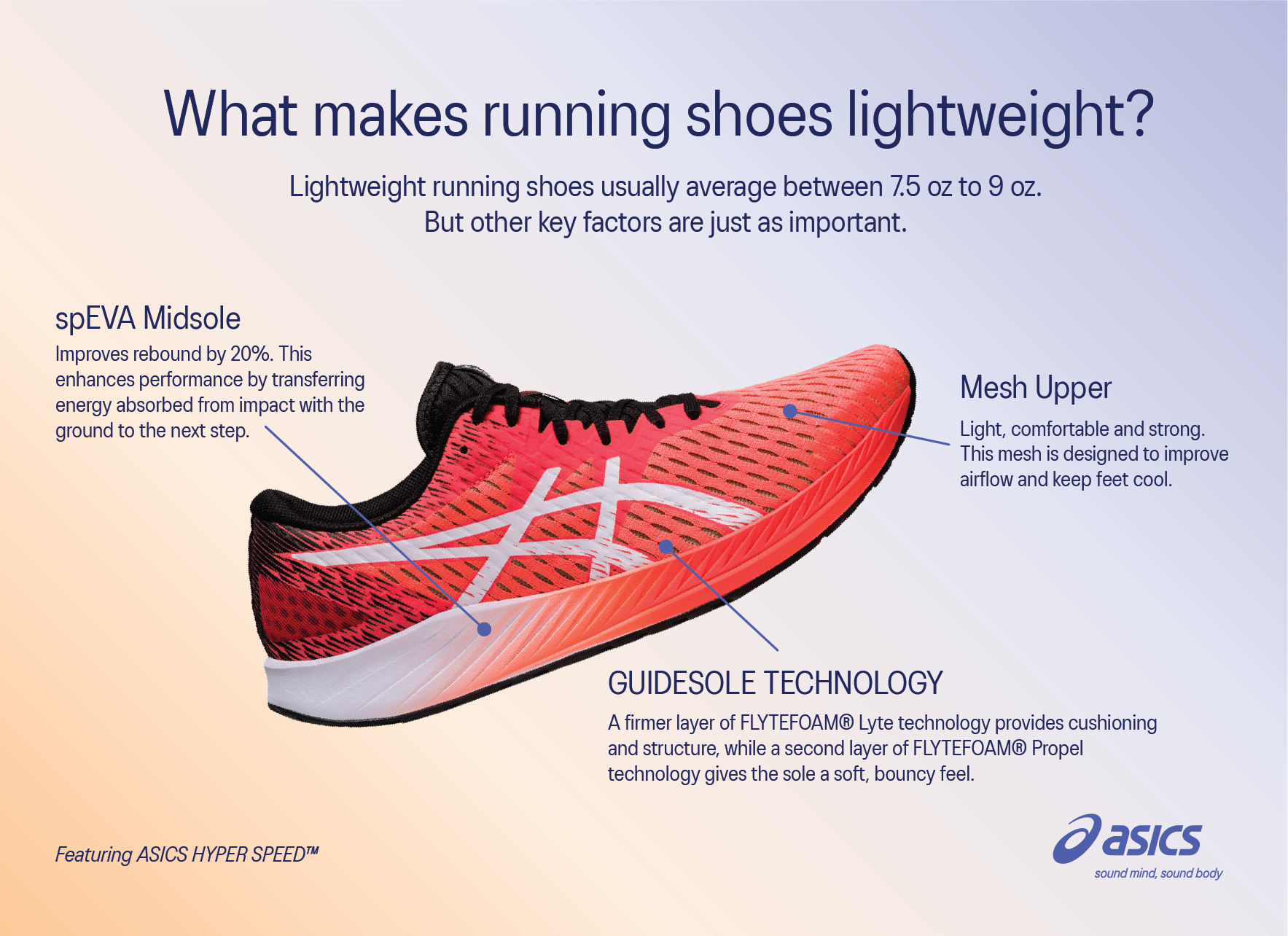
Key features of the Alphafly: - Dual-stack ZoomX foam (extra cushioning without added mass) - Full-length carbon plate with “ribs” for lateral stability - Aerodynamic mesh upper with minimal overlays - Hollow spike-like pods in the forefoot (reducing contact weight)
On the scale, the Alphafly Next% weighs around 188 grams (men’s size 9). For elite women, the weight drops below 160 grams. That’s 20–40 grams lighter than previous generation racers—and still more responsive.
Other brands have followed with their own versions: - Adidas Adios Pro 3: Uses Lightstrike Pro foam and a dual-density stack. Weighs ~195g. - Saucony Endorphin Pro 3: PWRRUN PB foam with a nylon plate. ~210g. - New Balance FuelCell SC Elite v4: Faster foam compound, carbon plate, ~198g. - Hoka Hyper Elite: Early adopter of thick, lightweight foams. ~225g.
While competitors close the gap, Nike’s combination of weight, responsiveness, and race-proven results still sets the standard.
Why Lightness Alone Isn’t Enough
It’s tempting to assume that “lighter = faster.” But in real-world racing, too-light shoes can fail.
During early Vaporfly testing, some athletes reported instability. The foam was so soft and light that foot positioning on uneven roads became risky. Over 26.2 miles, a single misstep could wipe out hours of pacing.
That’s why the carbon plate was essential. It doesn’t just add propulsion—it stiffens the shoe, preventing excessive torsion and keeping the foot aligned during toe-off.
Also, ultra-light foams degrade faster. Pebax-based foams like ZoomX lose energy return after ~200–300 miles. That’s fine for a racing career of 4–5 marathons, but impractical for daily training.
The ideal balance? - Light enough to reduce fatigue - Stable enough for long-distance control - Durable enough to last the race
The Alphafly hits that sweet spot—barely.
Behind the Scenes: The Testing That Made It Possible
Nike’s Breaking2 project wasn’t just about shoes. It was a systems-level assault on the two-hour barrier.
They tested over 30 sole configurations, 15 upper designs, and 7 plate geometries. Runners cycled through treadmill sessions monitored with metabolic analyzers, measuring oxygen consumption down to the milliliter.
One prototype used a titanium plate—lighter than carbon but too stiff. Another used a triple-stack foam design, but added 30 grams and increased rolling resistance.
The final design used computational fluid dynamics (CFD) to model air resistance from foot strike to lift-off. They even analyzed how much energy was lost to vertical oscillation—the bounce in a runner’s stride.
The conclusion? For every 1% reduction in shoe weight, there was a measurable drop in energy cost—but only if the shoe maintained stiffness and grip. That’s where the Alphafly’s tri-star outsole pattern came in: fewer contact points, less drag, better transition.
Real Runners, Real Gains
You don’t have to be Kipchoge to benefit from this tech.
Take Sarah, a 3:15 marathoner from Portland. After switching to the Alphafly Next% for her long runs and race day, she dropped to 3:02—without increasing weekly mileage.
“I felt like I was being pulled forward,” she said. “And the weight—honestly, I couldn’t feel the shoes after mile 10.”
That’s a common report. Recreational runners notice less leg fatigue, especially in the final 10K. The energy return doesn’t eliminate effort, but it smooths the downslope of exhaustion.
However, there are caveats: - These shoes require strong calves and Achilles tendons. The stiff plate increases strain on posterior chain muscles. - They’re expensive. Retail prices range from $250–$300. - They’re not for every runner. Those with flat feet or overpronation may need stability features absent in racers.
Still, for runners focused on performance, the cost-per-second-saved often justifies the investment.
The Future of Lightweight Marathon Footwear
The next frontier isn’t just lighter shoes. It’s adaptive ones.
Prototypes in development use: - Variable-density foams that stiffen under high load - Active carbon plates with micro-hinges for better toe-off - 3D-printed lattice midsoles tuned for individual biomechanics
Some labs are experimenting with graphene-infused foams—materials that could cut weight by another 15% while improving durability.
And yes, future midsoles may weigh less than 50 grams. Think: a cotton ball with the resilience of memory foam.
But as the technology advances, so do the debates.
World Athletics has already placed limits on sole thickness (40mm max) and plate count (one per shoe) to preserve fairness. The “shoe wars” have sparked controversy—was Kipchoge’s run a triumph of human spirit or engineering?
The answer, of course, is both.
Final Thoughts: Gear That Elevates, Not Replaces
The shoes that shattered the marathon record aren’t magic. They’re precision tools—crafted for a specific mission: go farther, faster, with less energy.
Calling them “lighter than a bar of soap” isn’t hype. It’s a testament to how far materials science has come. But they won’t turn a weekend jogger into an Olympian.
They will, however, help anyone with real training behind them squeeze more from every stride.
If you’re serious about your next marathon: - Invest in a pair of modern carbon-plated racers - Break them in during long runs, not on race day - Pair them with smart pacing—not just raw effort
Because the future of running isn’t just in the legs. It’s in the soles.
FAQ
Are shoes lighter than a bar of soap actually possible? Yes—the midsole foam in shoes like the Nike Alphafly weighs around 78 grams, less than a standard bar of soap.
Do lightweight racing shoes make a noticeable difference? Yes. Studies show up to 4% improvement in running economy, translating to minutes saved in a marathon.
Can amateur runners use record-breaking shoes effectively? Yes, but they require strong supporting muscles. Beginners should build up mileage and strength before relying on them.
Why are carbon-plated shoes controversial? Some argue they provide an unfair mechanical advantage, leading to rule changes by World Athletics on sole thickness and plate use.
How long do ultra-light racing shoes last? Typically 150–300 miles, depending on the foam. They’re designed for racing, not daily training.
Are there affordable alternatives to Nike Alphafly? Yes—shoes like the Asics Magic Speed 2 or Puma Deviate Nitro 2 offer similar tech at lower price points.
Should I wear carbon-plated shoes for my first marathon? Only if you’ve trained in them. Race-day surprises—like blisters or instability—are common without proper adaptation.
FAQ
What should you look for in Lighter Than a Bar of Soap: The Shoes That Broke the Marathon Record? Focus on relevance, practical value, and how well the solution matches real user intent.
Is Lighter Than a Bar of Soap: The Shoes That Broke the Marathon Record suitable for beginners? That depends on the workflow, but a clear step-by-step approach usually makes it easier to start.
How do you compare options around Lighter Than a Bar of Soap: The Shoes That Broke the Marathon Record? Compare features, trust signals, limitations, pricing, and ease of implementation.
What mistakes should you avoid? Avoid generic choices, weak validation, and decisions based only on marketing claims.
What is the next best step? Shortlist the most relevant options, validate them quickly, and refine from real-world results.
.jpg)